Posts

Showing posts from July, 2021

Std.7 sst ch.1 question answer

2 . If the Himalayas did not exist     If the Himalayas did not exist, India would be very different. The cold winds from Central Asia would enter India freely, making the climate much colder and drier. Many rivers like the Ganga, Yamuna, and Brahmaputra might not exist because these rivers originate from the Himalayan glaciers. Without the Himalayas, there would be less rainfall, fewer forests, and farming would become difficult in many regions. The northern plains might even look like deserts. The Himalayas also protect India from strong winds and help in bringing monsoon rains, so life in India would be much harder without them. 3. Why is India called a ‘mini-continent’? India is called a “mini-continent” because it has great diversity in physical features, climate, culture, languages, and natural resources, just like a continent. It has mountains in the north, deserts in the west, plains in the center, plateaus in the south, and coastal regions on both sides. Different par...

TUGHLAKABAD

Image
 TUGHLAKABAD In 1320, Khilji rule was usurped by Khusro Shah in a bloody coup. Owing to the resistance of the military governor of Multan same year Ghyasuddin Tughlukshah  became the Sultan of Delhi. Tughlaks established their own township, popularly known Tughlakabad. Tughlakabad is one of the formidable reminders of Delhi's embattled past and the terror and valour of that era. Ghyasuddin came to power by beheading Khurso Khan, who had also snatched power in a bloody coup. Ghyasuddin Tughluk in order to counter attach the invading Mongols raised pyramids of enemies' heads and used the elephants to crush the captives to death. Mohammad Bin Tughlak after ruling for seven years shifted the capital to Daulatbad, Devgiri, in Aurgangabad District of Deccan. Daulatabad had water scarcity and the people suffered severely. After he realized his mistake, he shifted the capital again to Delhi in 1334. To reduce the suffering of his subjects, he built a new township and named it Jahanpan...

Bodh gaya

Image
  Bodh Gaya Bodh Gaya is a village in the northeast Indian state of Bihar. Considered one of the most important Buddhist pilgrimage sites, it's dominated by the ancient brick Mahabodhi Temple Complex, built to mark the site where the Buddha attained enlightenment beneath a sacred Bodhi Tree. A direct descendant of the tree sits within the complex today, along with six other sacred sites, including a lotus pond. . History Bodh Gaya is considered to be the holiest site in Buddhism. Known as Uruwela in the Buddha's time, it is situated by the bank of Lilajan River. The first temple at the site was built by King Ashoka. Traditionally, Buddha was born in 563 BC on the following auspicious Baisakhi purnima. As Siddhartha, he renounced his family at the age of 29 in 534 BC,[8][9] and travelled and meditated in search of truth. After practicing self-mortification for six years at Urubela (Buddhagaya) in Gaya, he gave up that practice because it did not give him Vimukthi. Then he discov...

new delhi zoological park

Image
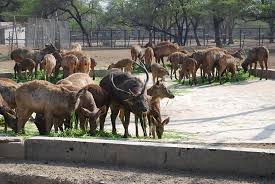
  The National Zoological Park is a 176-acre zoo in New Delhi, India. A 16th-century citadel, a sprawling green island and a motley collection of animals and birds, all in the middle of a burgeoning urban Delhi.   The  National Zoological Park  ( Delhi Zoo ) is a 176-acre  zoo  in New Delhi , India. A 16th-century citadel, a sprawling green island and a motley collection of animals and birds, all in the middle of a burgeoning urban Delhi. The zoo is home to about 1350 animals representing almost 130 species of animals and birds from around the world. The zoo can be seen on foot or using a battery-operated vehicle which can be rented at the zoo.  Visitors are not permitted to bring any food other than drinking water, but there is a canteen in the zoo. History The Delhi zoo came decades later after  New Delhi  was built. although the idea to have a zoo at the national capital was mooted in 1951, the park was inaugurated in November 1959. In 195...